Thursday, March 29, 2012
Response Questions
I was very happy about my topic and book I chose for this project. The reason is because the revolution fascinates me and being able to understand what the founding fathers went through was a great was to get a new perspective for me. I found the part about the Boston tea party to be the most intriguing because I knew about how they dressed and the main points but I really didn’t know about Francis Rotch or his purpose in the story and I gave me a new perspective on what happened leading up to the Boston tea party and why they were so angry. I feel that I learned more about how our Constitution was written, the Bill of rights and the amendments and the struggles the men who wrote them went through while they were writing this away from their families. I also learned how to use a blogging website. I liked the book and learned that sometimes what we hear when we are young (like 8th grade and 11th grade American history) isn’t always the entire story or maybe I didn’t always listen but now I know a lot more about it then I did before. The most enjoyable part of the project for me would have been being able to connect what was in the book with an old television show I used to watch on PBS kids named Liberty’s kids (even though it was animated and probably not always correct with details). The reason being that it was more enjoyable since I am more of a visual learner and I have to have thing visually explained to me in able to understand them better. The most difficult part of the project honestly had to read that huge book because before the only big books I have ever read were twilight, but it was very good and as I nick named it the “spark notes to all the American History text books”.

the council of war and Washington
 |
| Washington Crossing the Delaware Painting |
George Washington called for a Council of war to discuss
exactly how they would be able to fight this war. They were outnumbered by a
lot and the British were better trained than the American soldiers. This was
the plan to take the opposition down at Trenton. This is where we get the
picture of Washington crossing the Delaware on Christmas night. These men were
passionate about their freedom and would not let anything get in their way. Washington
was a great leader and was also a great president. He knew how to lead an army because
he and been a part of it before and also had the will to want to win this war
and the freedom that came along with it. This was to be a surprise attach and
was kept that way even though only one part of the army meant to fight made it
across and they won.
The Declaration of Independence
The declaration of Independence was written on July fourth
1776. On this day every year we celebrate our freedom form Brittan but it
really isn’t the day we were free it was just the day all the members of the continental
convention signed the Declaration of independence. This document was written by Thomas Jefferson
and was signed by all the members in Philadelphia Pennsylvania. The beginning
of the Declaration states that “all men are created equal and are endowed by
their creator certain inalienable rights” (the Declaration of independence, Thomas
Jefferson 1774). The framers certainly wanted to declare those rights which
they felt they hadn’t had since they were colonist because of British rule and
power. They had been mad at England for all the things that had been happening
and all the acts they were passing that they had to state what they thought
they should defiantly have as human beings if one day they were to be free to
have their own country. Also they had been mad for the reason that they couldn’t
be free to be their own people or even to just have representations so that
they would at least understand why they were paying the taxes they were paying.
These are the rights we have today as American citizens thanks to Thomas
Jefferson and all the other men who signed this Declaration.
The Constitution: Slaves
Every little kid when they think of America being free they
think EVERY PERSON was free after that point in time( at least I did). Slaves were
a big part of society at that time and were not free during or after the
revolution. These slaves were later counted as three fifths of a person for
voting rights but were not allowed to vote. I think that that is cruel not to
let someone you are counting as part of the population to vote. How they
counted them as 3/5ths of a person) was mean also. These people were
bought and sold as property during this time and their owners were not going to
give them up any time soon. The constitution even stated this much in its words
and that no person should steal another’s property (which included slaves). The
men that wrote our constitution and our declaration of independence were also
slave owners and many were in favor for counting them as so that way they would
have a bigger representation and mostly the southern countries who believed in
it more than the northern ones.
The Virginia Plan
The Virginia plan was to have representation based on
population with only one branch. This would later end up being what our House
of Representatives would be based on. This
scared the smaller states simply because they were afraid that they would not
have representation and they would eventually become the back burner and the
bigger states would run them. This came up because they were discussing the new
amendments and how they would run the legislation and their powers. This was a
big deal and as the author of the book says “The conversations must have been intense”.
I agree because first of all these were people who were representing all the
people back home in their states and another reason being that they had just
come out of a government that gave them no representation and taxed them high
amounts for everyday products like tea. They added more and more to this plan
and many smaller states sat around to hear what were happening knowing that this
would affect them as well. Many of the things that they talked about are not
known to us now but I think it would have been cool to sit in and listen to
this happening and I wonder if they ever thought that many people would look up
to them one day.
The New Jersy Plan
New Jersey was a small colony and opposed the Virginia plan, which I will discuss later; because it helped the larger states have more power than others would have. The reason for this being was that they believed that all should have equal representation. The main reason that they were angry with Brittan during the revolution was because of no representation but they were still getting taxed and this is what the smaller colonies were facing no equal representation. This New Jersey plan was written and proposed by William Patterson who was from New Jersey. This plan consisted of every one having and equal vote and equal representation in at least one house. This was argued that this should happen mainly because everyone was equal and all should be equal. This plan required only one House and was turned down. But later as time went on we see that some of the plan was taken into consideration and we have the Senate with each state being equally represented. Madison was against this mainly because this contradicted what he liked and talked about and if the small states that followed him were to go on board with this he could possible loose his plan.
The Necessary and Proper clause
The necessary and proper clause was put into
action to allow the people running the government what actions they could make.
The necessary and proper clause includes how the governmental powers are to be
distributed and how they are to be used. Also on how they should be within
reason and not just because. The reason for this was so that no one could over
use power given to them or so that they could not abuse these powers. It also
allows for people to be punished and sets up guidelines to be followed on how
to deal out the punishment. It also set up a Supreme Court and the other legislative
branches. It set up rules on how to set up banks and how to regulate money and
coin money. It also set up rules on how to set up courts and court presiding.
Framing of the Constitution
Mason and his helpers were the men who wrote the
first Bill of rights and the first Constitution. Even though many didn’t believe
in this new constitution he still came up with the ideas and it was passed just
like the Bill of rights he thought it needed as well. Nearly ten years later we
would have our Permanent Constitution and Bill of Rights. After their freedom
from Brittan the Americans had no structure and were badly in need of this. That is where the Articles of Confederation
came in and were later changed because more structure was needed and more stability
is what was needed to save the society of that time. This was a hot discussion
topic mainly because most of the men thought that it was fine the way it was and
did not need the Bill of right. To some extent all agreed on that but then they
started to notice that they could add some things that would clarify some of
the articles and some that were not even stated. I think that overall this was
good to add the Bill of rights mainly because now we know many were added later
on throughout the years and it was easier to do without having to redo the
entire Constitution.
Works Cited
The book I used was
Rakove , Jack. Revolutionaries: A new history of the Invention of America. New Yoork City : Houghton Mifflin Harcourt Publishing Company, 2010. 1-465. Print.
The website I used to help me with the Bill of rights:
. "History of the Bill of Rights." Revolutionary war and beyond. Revolutionary War and Beyond, 2008. Web. 29 Mar 2012. <http://www.revolutionary-war-and-beyond.com/history-bill-of-rights.html>. ("Revolutionary war and beyond")
And the website I used for the necessary and Proper clause:
George Washington : . N.p., n.d. Web. 29 Mar 2012.< http://www.gardenofpraise.com/ibdwash.htm.>
The Federlist Papers: wich was a picture of a book http://www.tower.com/federalist-papers-alexander-hamilton-james-madison-john-jays-paperback/wapi/116116611
and also http://www.britannica.com/blogs/2011/06/james-madison-final-publius-dies-175-years-today/
Paul Revere: . "12 Things you may not know about Paul Revere." The History Channel . N.p., 2011. Web. 29 Mar 2012. http://www.history.com/news/2011/04/18/12-things-you-may-not-know-about-paul-revere/. ("History Channel ")
Samuel Adams:
Rakove , Jack. Revolutionaries: A new history of the Invention of America. New Yoork City : Houghton Mifflin Harcourt Publishing Company, 2010. 1-465. Print.
The website I used to help me with the Bill of rights:
. "History of the Bill of Rights." Revolutionary war and beyond. Revolutionary War and Beyond, 2008. Web. 29 Mar 2012. <http://www.revolutionary-war-and-beyond.com/history-bill-of-rights.html>. ("Revolutionary war and beyond")
And the website I used for the necessary and Proper clause:
. "Necessary and Proper Clause." Onecle. N.p., 2006. Web. 29 Mar 2012.
("Onecle")
<http://law.onecle.com/constitution/article-1/49-necessary-and-proper-clause.html>.
and last the Decleration of independance:
The pictures i used in order of how i posted them on the blog are: and last the Decleration of independance:
. "The Declaration of Independence." U.s. history. ushistory.org, 1995. Web. 29 Mar 2012. <http://www.ushistory.org/declaration/document/>.
("U.s. history")
George Washington : . N.p., n.d. Web. 29 Mar 2012.< http://www.gardenofpraise.com/ibdwash.htm.>
The Federlist Papers: wich was a picture of a book http://www.tower.com/federalist-papers-alexander-hamilton-james-madison-john-jays-paperback/wapi/116116611
and also http://www.britannica.com/blogs/2011/06/james-madison-final-publius-dies-175-years-today/
Paul Revere: . "12 Things you may not know about Paul Revere." The History Channel . N.p., 2011. Web. 29 Mar 2012. http://www.history.com/news/2011/04/18/12-things-you-may-not-know-about-paul-revere/. ("History Channel ")
Samuel Adams:
. "Questioning with Boldness." Questioning with Boldness. N.p., 3/20/2011. Web. 29 Mar 2012. <http://questioningwithboldness.wordpress.com/2011/03/20/wisdom-of-the-day-samuel-adams-9/>. (questioning with Boldness)
.
The First Continental Congress:
"The intolerable Acts and First Continental Congress." The Amrican Revolution . University of San Francisco, 2003. Web. 29 Mar 2012. <http://www.usfca.edu/fac_staff/conwell/revolution/congress.htm>. ("Amrican Revolution ")
Ben Franklin:
. "Portriat of Benjamin Franklin." Achiveing early America . N.p., 2011. Web. 29 Mar 2012. <http://www.earlyamerica.com/portraits/franklin.html>. ("Achiveing early America ")
The Tea Act abd Townshend acts:
. bauman rare books. N.p., n.d. Web. 29 Mar 2012. < http://www.baumanrarebooks.com/rare-books/parliament/tea-act-with-1767-townshend-act-1772-tea-act/72307.asp&xgt;. ("bauman rare books")
Hutchinson:
. "Thomas hutchinson." NNDB. N.p., 2011. Web. 29 Mar 2012. <http://www.nndb.com/people/195/000049048/>. ("NNDB")
The Bill of rights:
http://crooksandliars.com/susie-madrak/more-half-students-tested-dont-know-p
The constituion:
http://en.wikipedia.org/wiki/Second_Continental_Congress
Washington Crossing the Delaware:
The Bill of rights:
http://crooksandliars.com/susie-madrak/more-half-students-tested-dont-know-p
The constituion:
http://en.wikipedia.org/wiki/Second_Continental_Congress
Washington Crossing the Delaware:
. "What's Wrong with this Picture?." Archiving Early america. N.p., 2012. Web. 29 Mar 2012. <http://www.earlyamerica.com/review/fall96/crossing.html>.
("Archiving Early america")
And all Videos From Youtube which include Liberty's kids and the other Youtube videos
The Bill of Rights and the Amendments
 |
| the Bill of Rights |
After the Constitution was adopted some states felt like there needed to be additions and changes made to the Constitutions. Some were angered by this and even though majority agreed on this and they had to publicly accept this. In private they held more concerns than the others and some even felt like the Bill of Rights and the amendments were not needed. This Bill of rights was decided by all and it was something even Jefferson agreed on while in Paris. The Amendments were added to the constitution which we stared using in 1788. The Articles of confederation were what was used to rule the land until the framers came up with the United States Constitution. Many didn’t think that the constitution would change anything they just thought that if they had a new set of revised rules that something’s would get better but all it they had was hope. The Constitutions and the bill of rights are still used to today and they are what tells us what we can legally do and the rights we have as American citizens. The amendments are additions to the Bill of rights and were added as the years progressed an example of one would be the amendment that allowed women to vote or the amendment that set the slaves free.
The adoption of the Constitution
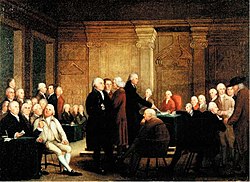 |
| The continetal congress |
Wednesday, March 28, 2012
Background of the Constitution
With the war at an end the American colonist
free from the British. One great reality struck them: we are now our own
country and must come up with rules and rights for our citizens. At this time
the Mississippi was the border of territory owned by America, the treaty stated
such and that they would become their own country in time together. The Second
continental congress would eventually become the birth place of our rights and
where the Constitution was born. This congress however was not really ready for
the things it was about to face or how to come up with anything to make this
freedom successful. The new constitution was born in 1787. Both peace treaties
were signed in Paris, France. The Paris that we think of now is so much
different from the one back then. When we all get the chance to go there we
should stop and think this is the place where my freedom was born.
The Tea act and the Townshend act of 1767
The Tea act and the Townshend act of 1767 sparked a lot anger between the
colonist. Because North was suspected of illegally smuggling tea into the
colonies the members of parliament asked him to stop but also made the East
India Company’s tea more competitive. This was a way for the colonist to start
rebelling once again and they used the opportunity to their advantage by
picking up old habits and protesting but also harassing officials and members
of parliament. No matter how many protest or how much they hated it the ships
kept coming back with more items and tea on board. Hutchinson had told the
colonist that he was against the ships return or even them coming in the
beginning. No matter what people said he would not budge and left the ships in
the Harbor and like I said earlier Rotch came to ask and pleaded to let the
ships go but he didn’t. He willingly
took what was coming to him because it would show paliment that because they
did not make the colonist behave they were lost and he also knew that they
weren’t going to behave if they were made to behave either. Hutchinson accepted
people’s criticism and their judgments so that he could use them as black mail
for his own revenge games.
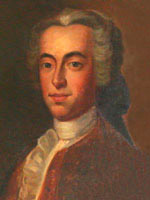 |
| Thomas Hutcinson |
 |
| The Tea act and the Townshend act of 1767 |
Benjamin Franklin
 |
| Benjamin Franklin |
Benjamin Franklin was a big critic of Thomas Hutchinson. He was well known for his inventions, and for being a well liked and known in London. He lived in London for some time as a liaison for Massachusetts, Pennsylvania New York and Georgia. Franklin favored London rather than America and his opinion over the rising tension was that if we kept a good alliance and stayed as one with Brittan than it would be best for everyone. But the colonist rebelled and broke away from Brittan and Franklin was a big supported and a big part of our government. Franklin changed his mind in 1772 when he came across some letters of Hutchinson. He sent them to specific people and for their eyes only, but instead were later printed in the Boston newspaper. At that moment the Massachusetts colonist wanted Hutchinson and his Brother in law Andrew Oliver out of office. Franklin’s only reason for sending the letters was that Hutchinson was unfair and the colonist deserved better than they were getting. Instead of what he wished would happen people found out that he had sent the letters to the people and he was stripped of his title as Post master general for North America in 1774.
The First Continental congress
 |
|
The First Continental congress |
The British were punishing the colonist and thought that the consequences that were dealt to punish Massachusetts would scare the colonist straight and no one else would try something else. The response was the total opposite though, the colonist were angered by this and all stuck together to fight for the rights that they deserved. While all these things were happening to the colonist they were so fed up about this that each state came up with representative who voiced their opinion and be able to represent the true feelings of the colonist. This was the First Continental Congress which met in September of 1774 in Philadelphia and was to meet again in May of 1775. This was something new for everyone and as the author of the book says many people were in awe of this and commented ‘The laws would be like ‘of the Medes and Persians, which must not be altered’” which was in the bible. Many men were sent to this first congress by the colonies Massachusetts sent John and Samuel Adams (cousins). All the men that went were in for a great surprise because it was nothing like they could ever think up. The main goal of the first continental congress was to come up with ways to get the attention of the British and make them give the colonist representation on Parliament. After the consequences of the Boston tea party their focus changed from trying to get a representation to trying to establish a country with rules and guidelines and the Declaration of independence and the Constitution. This is how we got our government and this was also our first congress and this would stay in place until today.
Tuesday, March 27, 2012
The True story of Paul Revere
The Boston Tea party could have been avoided if the ships would have been allowed to leave back with their cargo to Brittan and the rebellious acts that followed could have been eliminated but they weren’t and so from that time forward many more demonstrations against England had come and gone and they were getting fed up with the colonist not obeying. Paul Revere will always be remembered as the man who rode his horse yelling “the British are coming” but how much do we truly know about what was really happening and where he was going because indeed he did have a target and somewhere he was going. Paul Revere’s main mission on the night of April 18th 1775 was to warn Samuel Adams and John Hancock of the impending danger that the British soldiers were about to arrest the two men. Paul was caught on his way to the men in Concord by the British before he could tell them. People who had heard the message passed it along and soon enough Adams and Hancock knew what was happening and knew to get away. Paul Revere was a big part of the revolution just as big as many of the other men in my eyes because if he wouldn’t have warned them then we wouldn’t have had Samuel and John in the Continental Congress with their brilliant minds helping fight for our country.
 |
| Paul Revere |
 |
| Samuel Adams |
 |
| John Hancock |
The plea and the boston tea party
Francis Rotch was the co owner of the Dartmouth (a ship containing items from the east India trade company). He was to plea with Governor Hutchison to allow him the okay to let the ship’s go back out and not get stopped. They were very close and if it weren’t this bad of circumstances they would probably having a good time enjoying each other’s company. Defeated Rotch returned back to Boston where Samuel Adams said that they had done all they could. Later that night the Boston Tea Party occurred. Men were dressed as warriors went to the dock and dumped all the tea contents into the water while people watched thinking they were crazy. A lot of pounds worth of tea was destroyed and wasted that night and because of its value was deeply punished. This was one of the protests that fueled the Americans with the power and confidence to start the American Revolution.
John Jay, Alexander Hamilton and James Madison and the Federalist papers
A Fun little movie and picture over John Jay, Alexander Hamilton and James Madison and the Federalist papers
 |
| The Federlist papers |
The men of the Revolution
 |
| the writers of the Federlist papers John Jay, Alexander Hamiliton and James Madison |
These men were all older in age when the revolution came around and they were the leadership of the time. John Jay, James Madison, and Alexander Hamilton were the younger generation of the time and also the young men who wrote the federalist papers. These men were brilliant and well educated and all even though they didn’t know it would lead the revolution finely and perfectly. Many conflicts happened to get the colonist to be so angry and they had even sent request twice in five years asking that they be represented in Parliament back in Britain. The colonist thought that parliament had no right to impose the taxes to the people without fair and equal representation for the colonist. Many conflicts led to the revolution and many great men helped lead it. Though they could probably not have fixed their issues it didn’t have to come to war and fighting. If it weren't for these men then we wouldnt have our freedom now and our history would not be what it is.
George Washington
 |
| our first president Gorge Washington |
George Washington was also the first child of his
dad's second wife like John. Also like the Dickinson’s the Washington family
was better off than normal farmers but underneath the most prominent families.
Washington was not given the chance to have schooling in London like John
because at the age of eleven his father died and he inherited farm land and
many other pieces of land and items that his father owned, slaves and acquired
schooling. He taught himself most that he knew and had a great knowledge even
though he was not given an English education. He became an officer in the
Virginia militia and sailed with his sick half brother to Barbados (which they
thought would cure his sickness but did not) and did not go out of America
again. He traveled to the Ohio valley to ask the French that were there
occupying it to leave. He was treated greatly by the French once he told them
nicely that the land belonged to the king and they allowed him passage. He was
given the position of colonel to command the Virginia regiment and married the
widowed Martha Parke Custis before going on the Duquesne expedition and got a
spot on the legislature. He became the owner of many slaves and many acres of
land when he married Martha and when his brothers widow died he inherited Mount
Vernon. After the British gained control of Canada military life was not all it
was cracked up to be for Washington and didn’t bring much interest to him
anymore.
Monday, March 26, 2012
John Dickinson
 |
| John Dickinson |
John Dickinson was three years older than John Adams and when Adams was choosing his profession and starting school John was already three years into his law studies. John was from a prominent family that owned lots of land in the new world and was his father’s son from a second marriage and his father wanted his children to be well off. He loved his parents and while in London he wrote them letters calling the "honoured". He was very loving and affectionate towards them and very respectful. Once he had been there for a while he found that there were things in London that he didn’t see or do back home in America. He wrote to his parents asking to extend his stay in London saying things like he could see and talk to way more people than back home and that he learned more than he did back home. He thought that owning slaves made a person more selfish and angry and cruel than others of the colonial time. He wrote letters to William Pitt during the Stamp act time and was shaped into politics from the way he saw the world.
John Adams
It's 1756 in Worcester, Massachusetts and John Adams is a teacher
to the children of farmers. In the little world of the John Adams he could find
all types of future people. Every single type of person was present but he didn’t
think of the future and what it might hold-a revolution. The knowledge he received
at Harvard in Cambridge was far more that what he needed in Worcester teaching
the children. Sill most of the men that graduated from Harvard were enrolling
in the ministry and becoming preachers he was a teacher. He has seen Brittan go
to blows with France over the Ohio Valley and now we flash forward ten years to
1765 and he has just married Abigail Smith and he is now an upcoming lawyer. He
is very outraged by the passing of the Stamp Act. The Sons of Liberty wanted to
close the courts and he was frustrated because he has just started prospering
and getting in good when slam courts close. If the American Revolution would
not have happened the best thing that would have happened to John Adams career
would have been him being a great attorney but it did happen and his life changed
forever. John always supported the rights of the colonist but never thought
much of becoming a Politian and after the stamp act was withdrawn John devoted
himself to political life.
Sunday, March 18, 2012
video over the brittish colonies during the revolution
map of Colonial america in the 1700's

This map shows the original British colonies. Colonial America during the revolution the time this book takes place. These were the original colonies of Great Brittan. These are the original thirteen states and many things would happen throughout these colonies over time that would change how we live today. These were the states that fought the Revolutionary war and won. The men from the First continental congress all came from one of these states and were all represented in our new country. The people in these colonies were originally from England and some left to escape Religious Persecution or because they wanted a new life and to get to see new places in the world. Many people in the years to come after the colonialization would get fed up with Brittan over not having representation or being taxed to high and these things that led up to the Revolution and Setting up the new government are what my blog will talk about.
Subscribe to:
Comments (Atom)